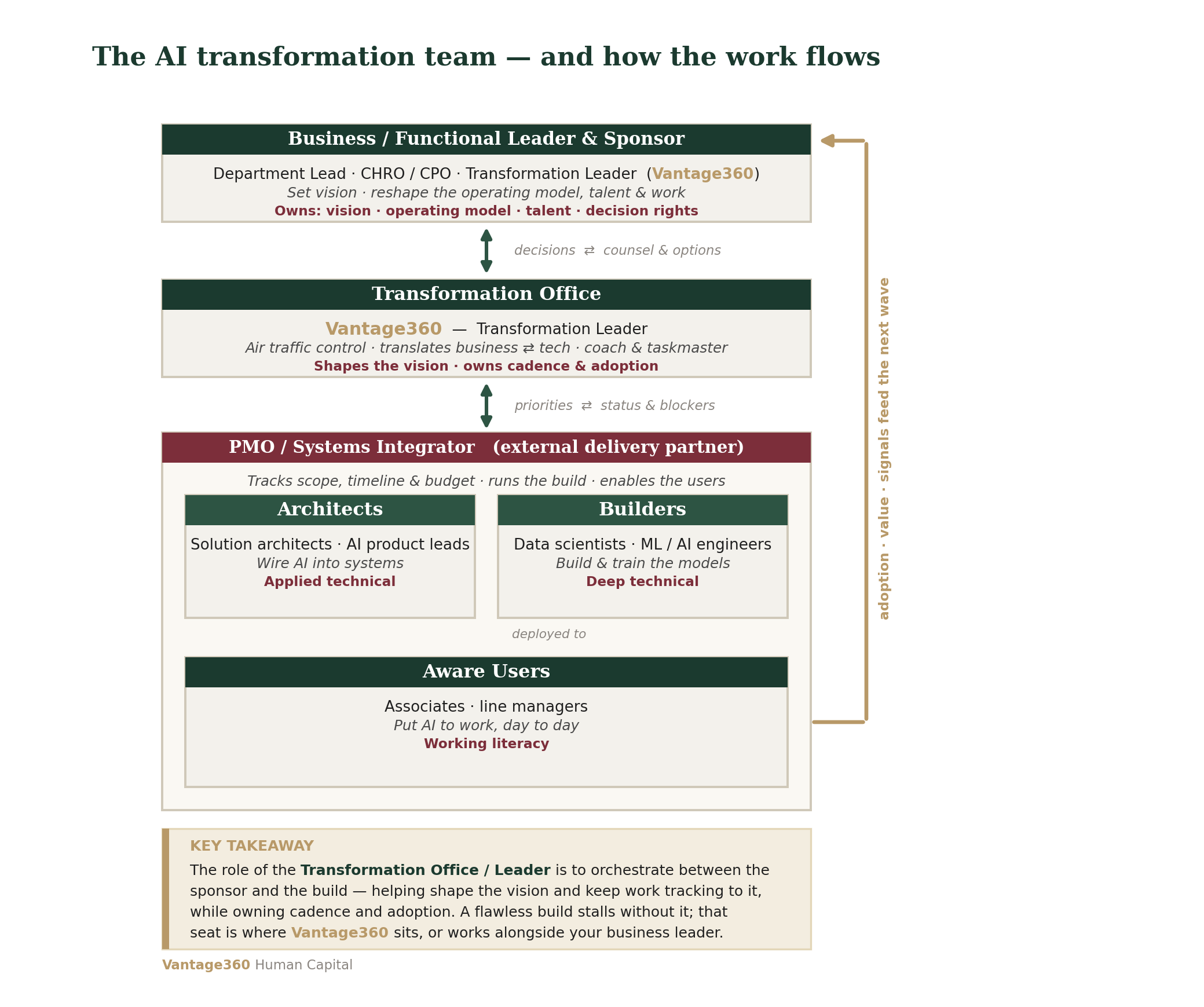
Where AI fluency meets transformation expertise.
AI-driven transformation will stay technically complicated for a long time. Leading it does not have to be.
The job is not to master the complexity — it is to uncomplicate it: find the clear vision underneath and aim everything at it. A transformation leader does not need to build the models. They need to understand enough of what AI can and cannot do to reshape the operating model, the talent, and the work around it — while the technical experts do the deep build. That is where I fit.
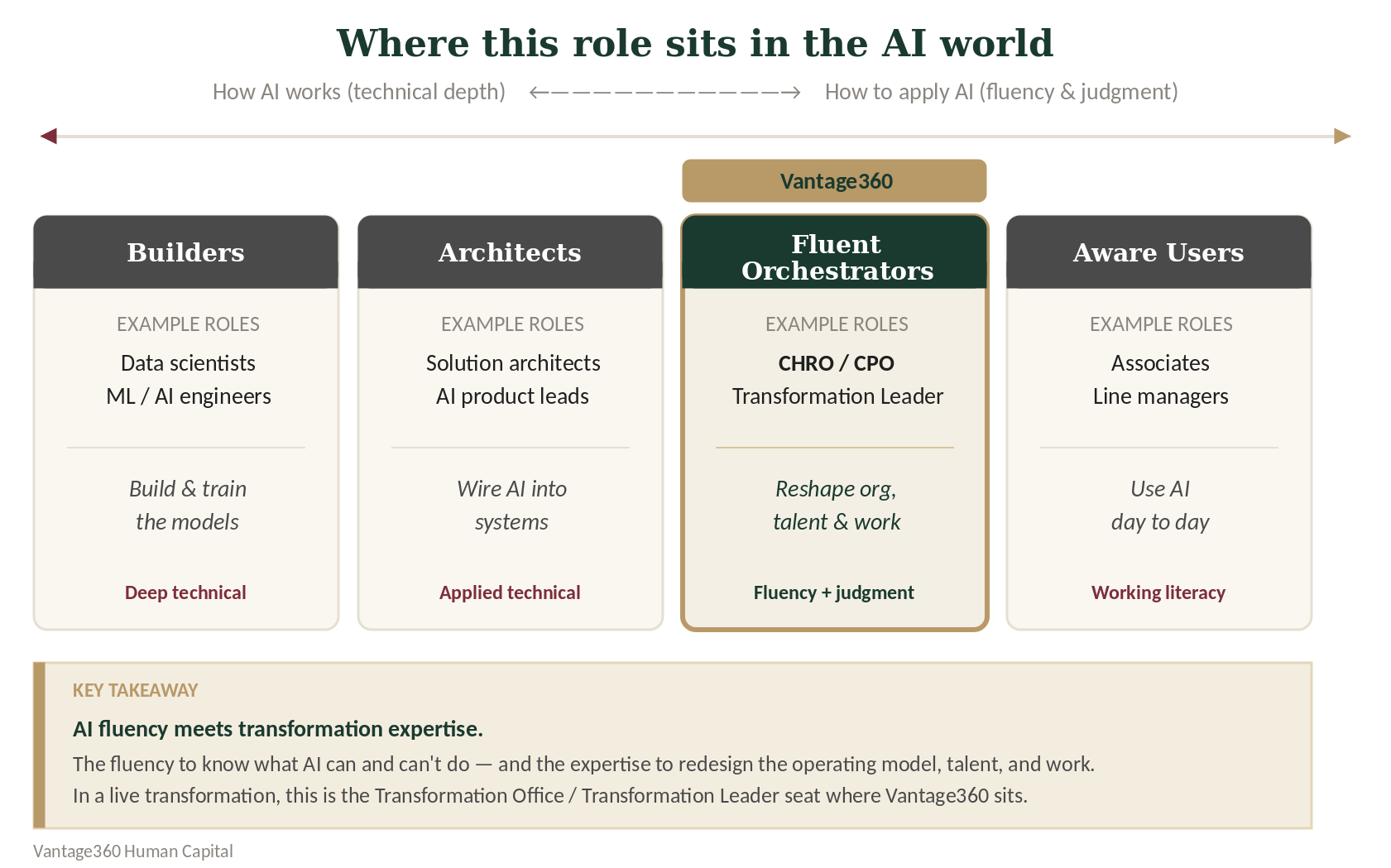
Those same four roles are how a transformation team actually comes together — and how the work flows. The business leader owns the vision and the decision rights. The Transformation Office — the Transformation Leader seat, where Vantage360 sits — orchestrates: shaping the vision, keeping the work tracking to it, and owning cadence and adoption. A PMO and systems integrator run the build, and the organization puts AI to work, with adoption and value feeding the next wave.